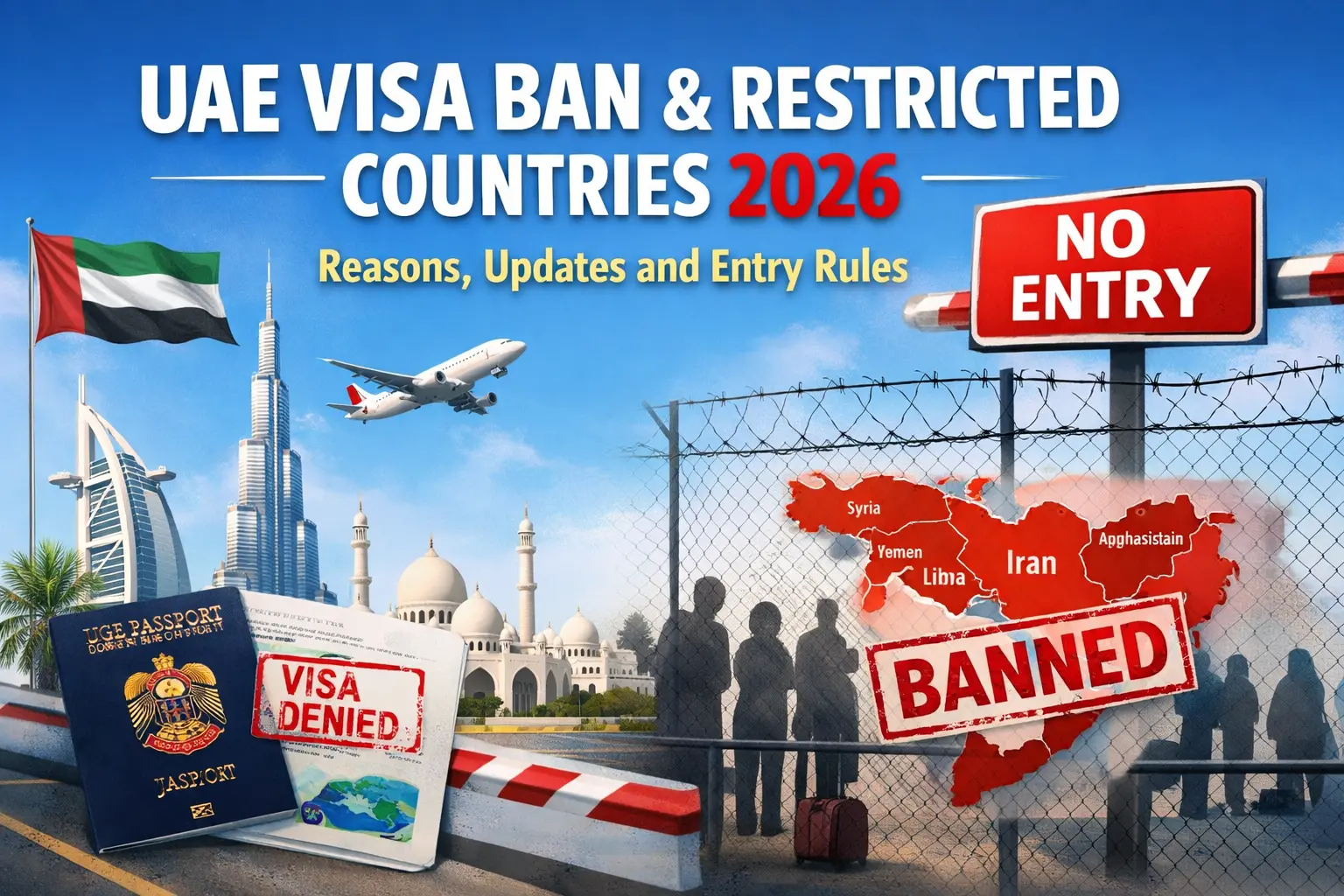
The UAE visa ban countries list is one of the most searched topics among travellers who want to stay informed about the latest immigration policies before submitting the UAE visa application. As of 2026, the UAE government has not officially announced a permanent UAE visa ban; however, temporary processing suspensions have been implemented for tourist and work visas, and higher visa refusal rates have been observed for certain countries based on reviews of their visa applications.
The UAE visa restrictions in 2026 vary according to nationalities and individual circumstances, as citizens of some countries may face higher refusal rates, additional screening, or temporary restrictions. These restrictions should not be considered a permanent visa ban. The difference between a nationwide restriction and an individual visa refusal is necessary when checking out the latest UAE visa status.
This is what makes it important for travellers to stay updated about the visa ban, latest policies, entry eligibility, and to know the real UAE visa status. If you are searching for a UAE visa entry ban, this guide will explain everything about the UAE visa ban 2026 country updates.
The latest UAE visa ban update 2026 has become an important concern for travellers looking for clear information on the UAE visa regulations. In 2026, there has been no official public announcement from the UAE government about a permanent visa ban for specific nationalities.
However, according to immigration consultancy reports and application outcomes, citizens of several countries are temporarily restricted from entering the UAE. They are facing ongoing rejection of tourist and work visa applications. This visa ban policy began to emerge in late 2025 and was implemented in January 2026.
Although these are temporary measures for the citizens involved, they are subject to stricter eligibility screenings, additional document checks, and visa rejections. Due to these uncertain circumstances, individuals are advised to verify their visa status through the official UAE embassy or authorized immigration channels.
The UAE suspends visas for the nine countries mentioned below: -
Afghanistan
Bangladesh
Libya
Yemen
Cameroon
Lebanon
Somalia
Uganda
Sudan
However, these countries should not be treated as an officially confirmed nine-country UAE visa ban list unless an announcement is made by the government.
No, there is no official UAE visa ban list in 2026 that permanently prohibits applicants from applying for a UAE visa. The immigration department has imposed temporary visa restrictions for specific nationalities. Some temporary visa or entry restrictions may apply under specific conditions, while some individuals may face refusals or additional security screening. Therefore, the banned countries list should not be considered an official UAE visa ban announcement.
According to various reports, several countries are frequently affected by the UAE visa restrictions.
|
Country |
Visa type |
Reported Situation |
|
Afghanistan |
Tourist/ Work |
Suspension of the issuance of new UAE tourist visas and work visas. |
|
Bangladesh |
Tourist/ Work |
Restrictions on the processing of UAE visas and delays in visas since 2024. |
|
Libya |
Tourist/ Work |
Temporary suspension of the issuance of the UAE visa. |
|
Yemen |
Tourist/ Work |
Processing of the UAE visa for Yemeni citizens is halted until further notice. |
|
Uganda |
Tourist/ Work |
Suspended the issuance of new tourist and work visas mainly because of health precautions. |
|
Lebanon |
Tourist/ Work |
Restrictions on the processing of the visa, including holds on both the tourist visa and the work visa. |
|
Cameroon |
Tourist/ Work |
Banned from submitting new UAE visa applications. |
|
Somalia |
Tourist/ Work |
Temporary ban on the UAE visa categories by the UAE immigration authorities. |
|
Sudan |
Tourist/ Work |
A broad visa suspension on new applications. |
The official reports do not clarify that the UAE visa is banned for Indian, Nepalese, and Pakistani citizens. However, applicants from India and Nepal may face individual visa refusals or additional document requirements depending on the circumstances. In the case of Pakistan, citizens can apply only for a family visa, as they are restricted from other visas. This does not mean that citizens of India, Nepal, and Pakistan are prohibited from applying for the UAE visa.
Among the UAE visa-ban countries, Afghan citizens are continuously facing restrictions on new tourist and work visas. While it has not been officially announced, reports indicate that the new visa applications are not being processed, which is consistent with the long-standing travel security policies. The UAE has temporarily stopped issuing UAE visas to Afghan nationals, and it is all because of concerns about national security and the risk of fake documents.
The UAE visa ban on Bangladesh highlights a suspension of issuing new tourist and work visas. Currently, Bangladeshi passport holders cannot apply for a UAE visa until the suspension is lifted. The existing residents of Bangladesh who have valid permits can live and continue to work, as the new visa restrictions don’t affect them. Recently, there has been a new UAE transfer update for Bangladesh, in which citizens are permitted to transfer from a tourist visa to a residence visa, but they may need to face enhanced security screening and strict designation requirements.
Libya has been listed in one of the UAE visa suspensions for nine countries, which are facing severe restrictions on receiving UAE visa applications. Despite no confirmed visa ban rule, the Libya nationals' visas are suspended, with high rejection rates.
For a few years, Yemen passport holders have faced a UAE visa ban situation, and in 2026, applicants experienced an adjournment on the tourist visa and the work visa. This indefinite suspension will be in place until further changes. The 2026 visa ban update confirms refusals for all new applicants, but will not impact existing nationals who already hold the UAE visa.
Ugandan nationals have been largely affected by the UAE visa restrictions, and the visa is especially banned for them to prevent the spread of the Ebola virus. Travellers from Uganda or those who are transiting through the country are facing the UAE visa ban.
On both the tourist and work visa, the UAE bans visas for Cameroonian citizens, and the ban is currently temporary. The visa applications from this country will not be accepted until the final decision is made by the government. The UAE consulates reject Cameroon passport holders' entry, while ensuring full security.
As per the UAE visa ban update 2026, it is indicated that visas are temporarily suspended for all Lebanese nationals due to national security concerns, regional conflicts, and overstaying. While Lebanese citizens face immigration scrutiny, the embassies of the UAE have taken an active role in the UAE visa ban for Lebanese citizens.
The UAE is consistently refusing visas for all Somali nationals, and it is currently paused. There are various reasons behind the visa rejection, including diplomatic relations and security protocols. For all Somalis, the visa ban is not just a normal restriction, but it is a barrier that disrupts family plans, livelihoods, and job opportunities.
Among the UAE visa-banned countries, Sudan is highly affected because of political disputes, document fraud, and theft. Although there is no official announcement, the issuance of the new visa has been suspended.
There is no official visa suspension for Indian nationals. Citizens concerned about the UAE visa ban on Indian passport holders should note that the visa will be processed normally while meeting the eligibility criteria. All visa decisions are made on an individual basis, and the restrictions are mainly based on documentation errors and not a nationality ban.
There is no nationality-based restriction on the Dubai visa for Nepalese citizens. In 2025, the UAE had temporarily restricted the Dubai visit visas due to security concerns and the process of tourist visa and work visa got delayed and even rejected. However, there is no confirmed UAE visa ban on Nepal, and the restriction is based on compliance factors rather than nationality.
Reports related to the UAE visa ban on Pakistan highlight that citizens can apply only for a family visa. They are banned from receiving the other UAE visa types, but can get the family visa after fulfilling all the requirements.
It is important to understand why the UAE has imposed restrictions on some of the countries and has put a hold on their UAE visas. So, the guide below mentions the reasons for UAE visa restrictions: -
According to the recent visa ban updates, national security is a key factor behind visa suspension. The UAE's actions have addressed fake documentation, unlawful migration, and identity theft. Among the list of specific countries, certain countries appear on the list aligned with documentary risks and regional instability.
The primary driver of the visa ban in the UAE for restricted countries is diplomatic factors. The sensitive relations with specific countries may shape the UAE visa policy. The strength of mutual relations between the UAE and the country directly impacts the visa policies.
Health concerns have always been important in the past, even before the pandemic era. The UAE considers different factors, such as incomplete health screening, weak healthcare prevention systems, and the spread of viruses, including communicable and infectious diseases. If a traveller from any of the restricted countries tests positive, their visa will be immediately refused or rejected.
According to the UAE visa policy, a temporary suspension is imposed on the work visa for few of the countries, and one of the reasons behind it is the labour market disruption. The workers from these countries are mainly in the fields of construction, retail, and domestic work. The limited renewals, recruitment delays, and no job opportunities have left the workers facing uncertainty about their future.
The tourist visa restrictions and the work visa restrictions are not the same, as they are associated with different purposes. Here are the key differences: -
|
Factors |
Tourist Visa Restrictions |
Work Visa Restrictions |
|---|---|---|
|
Current status |
The new UAE visa applications are suspended, with a high refusal rate. |
The work visa applications are suspended in most of the visa categories. |
|
Application Review |
The tourist visa application is reviewed through document validation, risk assessment, and security screening. |
The GDRFA reviews work visa applications by reviewing the employer’s file to ensure they have an adequate job and have no labour violations. |
|
Supporting Documents |
Proof of accommodation and other travel documents. |
Employment contract, work permit approval, and educational certificates. |
No, the UAE visa ban does not affect existing residents. The visa ban applies to new UAE tourist or work visa applications originating from outside the country. People who already hold a valid UAE residence visa can continue to live and travel in the UAE. As per the latest immigration policies, the UAE visa ban only affects new visas applied for by a few countries. Since changes in the UAE visa application process can occur, residents should check out the latest updates related to the UAE visa requirements.
To check the UAE visa ban status, the government offers different official services, and here are some of the following: -
A UAE visa can be rejected for many reasons, and not every visa refusal is linked to the UAE visa ban. Some of the UAE visa rejection reasons are: -
Incomplete documents or mismatched information
The UAE visa can be refused or rejected if the documents submitted are incomplete or the information in the application form doesn’t match the traveller's documents.
Poor quality documents
To get the UAE visa, clear documents need to be submitted. So, if your passport copy is blurred or the passport-sized photograph is not on a clear background, then your UAE visa will be rejected.
Immigration Compliance History
Another reason for visa rejection is previous immigration fines for overstaying or unresolved immigration penalties. These applicants will face increased scrutiny, so before submitting the UAE visa application, you must check all your records.
Unclear purpose of travel
Whether you are visiting the country for tourism purposes or for a job, stating a clear purpose of travel is important. By not mentioning the clear reason behind your travel, the visa will be rejected.
A UAE visa rejection does not mean that you are permanently removed from applying for the visa again. There are many reasons behind the visa refusal, so understanding the key reasons and how to avoid them is important. Here are the things to do if your UAE visa is rejected: -
To appeal a UAE visa rejection and avoid the travel ban, you should follow these steps: -
According to the latest UAE immigration authorities' rules and regulations, it has been stated that the UAE overstay fines have increased to AED 50 per day, and the penalty starts immediately after the visa expires. Depending on the visa category, a grace period may be provided, but once it ends, the visa fine is applied to the traveller's visa application. If there are repeated overstays, then it may lead to a UAE travel ban.
|
Myths |
Facts |
|
The visa ban to the UAE is permanent for the banned countries, and they can never enter the country. |
The truth is that the UAE visa ban is temporary, as the government has not officially announced the visa suspension. |
|
If your country is banned, you are personally banned. |
There is a difference between personal bans and nationality restrictions. |
|
Countries like India and Pakistan are officially banned from the UAE visa. |
India and Pakistan are not officially banned from the UAE visa. They may face individual restrictions, not nationwide restrictions. |
|
The UAE visa ban only impacts the work visas. |
Both the tourist visa and work visa are affected. |
The UAE visa ban countries in 2026 are driven by unofficial reports and the observed rejections, not yet announced by the UAE government. The UAE immigration authorities analyse every visa application individually, including document verification, travel history, and compliance. Since the visa immigration policies can be changed, it is always recommended to check the latest updates on the UAE visa eligibility and the reasons for visa refusal.
Q1. What is the latest list of UAE visa-banned countries in 2026?
Ans. As of the latest update in 2026, there are various countries facing the temporary UAE visa ban, including Afghanistan, Bangladesh, Sudan, Somalia, Lebanon, Libya, Uganda, Yemen, and Cameroon. There are three more countries that have faced individual-based restrictions, and these are India, Nepal, and Pakistan.
Q2. What is the key difference between a UAE visa ban and a UAE travel ban?
Ans. A UAE visa ban means preventing a person from obtaining a new residence visa, a tourist visa, or a work visa in the country. On the other hand, a travel ban restricts the individual from entering, exiting, or even transiting through the country.
Q3. How can I check my visa ban status?
Ans. To check the visa ban status, you can visit the Dubai Police Service or the ICP Services Portal.
Q4. What are some of the reasons behind the UAE visa suspension?
Ans. The reasons behind the UAE visa suspension are health emergencies, national security concerns, complicated relations, and labour market disruptions.
Q5. Is the UAE visa ban officially announced by the government?
Ans. No, the UAE visa ban update 2026 has not been officially announced by the government, as the suspension is based on reports, and immigration authorities describe it as a temporary restriction.
Q6. Can affected visa applicants still enter the UAE?
Ans. Yes, if an applicant already holds a UAE visa or a residence permit, they can live and travel in the UAE hassle-free.

With world-class hotels, iconic landmarks, and great shopping, Dubai is one of A...
Read More
Planning a trip to Dubai's shimmering skylines from Bulgaria? The United Arab Em...
Read More
Often seen as “Vegas in the desert,” Dubai has become a popular dest...
Read More
With the dazzling skyscrapers, golden deserts, pristine beaches, and luxurious m...
Read More
Flying from Amman to Dubai feels like a dream. You depart from the hilly landsca...
Read More